Word Box - Sort & Block Jam
Yalla Technology FZ-LLCWord
4.853.00 Reviews
- Version
- 1.2.1.0
- Installs
- 100.00K
- Age Rating
- Everyone
Screenshots
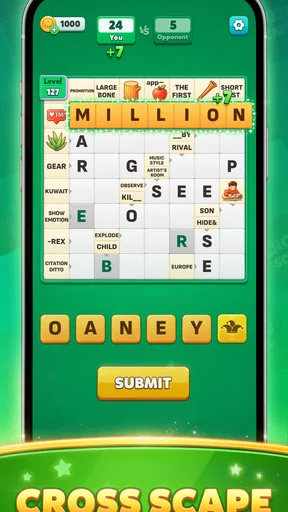
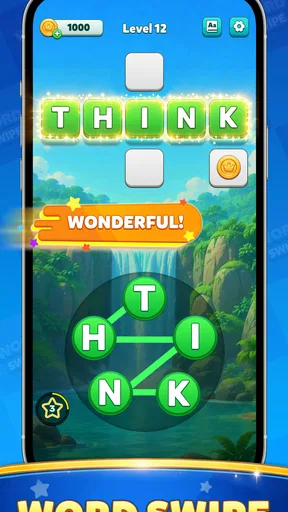
Our Review of Word Box - Sort & Block Jam
 Analysis by Appyee
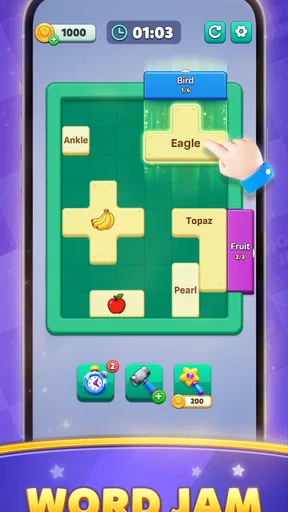
Word Box - Sort & Block Jam is the kind of word game I reach for when I want a short mental break rather than a long gaming session. It combines word-building with a block-sorting style of puzzle play, so the appeal comes from making quick decisions, spotting useful letter combinations, and gradually working through increasingly demanding boards. I found it easy to understand at first, but not so simple that every round felt automatic.
The game is free to start, carries an Everyone age rating, and comes from Yalla Technology FZ-LLC. Its store summary presents it as an all-in-one word puzzle game, but that description is too broad to explain why it can be satisfying. The real attraction is the small loop of looking at the available pieces, deciding what belongs together, and trying to avoid choices that leave the board awkwardly arranged.
How the first goals make the game approachable
The opening experience works because the basic objective is readable without demanding a long tutorial. I could begin by examining the visible letters and blocks, then test a likely move without needing to learn a complicated control scheme. That matters in a word game: the first few minutes should teach the relationship between sorting and word formation, not bury it under menus or instructions.
Early goals in this type of puzzle are useful when they give me a reason to keep looking at the board. Completing a word is the immediate reward, but the more important goal is learning how the available pieces interact. A move that looks helpful in isolation may consume a letter needed elsewhere, so I quickly started treating each board as a small planning exercise rather than a hunt for the first obvious word.
That makes the game suitable for casual players who enjoy vocabulary challenges but do not want a traditional crossword layout. It also gives younger players an accessible way to practise recognition and spelling, although the difficulty of later boards may not feel equally comfortable for every age group. The Everyone rating makes the game broadly approachable, while the actual challenge still depends on the player’s patience and word familiarity.
One practical tip is to pause before making the first move. I get better results by scanning the whole arrangement for short, flexible words and for letters that appear difficult to place. Clearing an easy combination immediately can be tempting, but preserving a useful vowel or common consonant often gives the rest of the board more room to breathe. That small habit makes the early stages feel more thoughtful without slowing them down.
Progress feels clearest when I focus on board control
The most useful progress signal is not simply finishing a level. It is noticing that I am reading the board more efficiently. At first, I tended to build the most visible word and hope the remaining pieces would fall into place. With more play, I began checking what that word would expose or block next. The game becomes more rewarding when completion reflects a sequence of good decisions rather than one lucky find.
This is also where the sorting element separates the experience from a basic word search. In a conventional word search, the answer is often already visible in a grid. Here, the player’s arrangement choices matter more. I have to think about order, space, and the consequences of removing one group before another. That extra layer gives the game a more tactile, puzzle-like identity.
For a quick everyday scenario, I can imagine playing during a coffee break or while waiting for an appointment. A single board gives me a compact task with a clear endpoint, and I can stop after a successful solution without feeling that I have abandoned a large story or team. It is especially convenient for people who prefer self-contained challenges over games that require a daily commitment at a fixed time.
There is a useful distinction between visible progress and meaningful progress. Moving quickly through uncomplicated boards feels good, but the stronger sign that the game is working for me is when I can recover from a poor opening. If I make an inefficient choice, I learn to identify the remaining bottleneck and rebuild my plan around it. That recovery process is more valuable than simply memorising common words.
The difficulty curve rewards patience more than speed
The challenge works best when I resist rushing. Word games often encourage players to fire off the first answer that appears, but the block arrangement makes speed less important than sequencing. A correct word can still be the wrong move if it leaves isolated letters or removes the support needed for another group. The game therefore rewards a calm scan of the board before committing.
I would recommend it to players who enjoy gradual increases in mental pressure. Someone looking only for instant word matches may find the sorting decisions mildly frustrating, especially when a board seems to offer several plausible answers. That friction is not necessarily a flaw; it is the part that turns a vocabulary exercise into a planning puzzle. Still, it means the game is not ideal for anyone who wants completely effortless relaxation.
My most effective approach is to separate the board into three questions: which word is easiest to confirm, which letters are hardest to use, and which move preserves the most options. The first question helps me gain orientation, the second prevents dead-end thinking, and the third protects the next turn. This method is more reliable than focusing only on word length.
Another non-obvious trade-off is that a short word can be strategically stronger than a long one. A longer answer may look more impressive, but it can consume several letters that would have supported multiple smaller combinations. When I judge a move by the space and flexibility it creates, rather than by its apparent size, the boards become easier to read. That is the kind of lesson a generic store description would not reveal.
Players who prefer crosswords, anagrams, or standard word searches will recognise the vocabulary side of the game, but the pacing is different. Crosswords usually depend on clues and intersecting answers. Word searches depend on visual scanning. This title sits between those formats, using word recognition while asking me to manage the order of pieces. It is a better fit for someone who enjoys arranging and eliminating possibilities than for someone who wants clue-based solving.
What keeps the short sessions moving
The pacing benefits from the fact that each puzzle gives me a contained objective. I do not need to remember a plot, maintain a large collection, or prepare a complex strategy before playing. I can open the game, work on the current challenge, and leave once my attention drops. That low commitment is a genuine strength for a mobile word game.
At the same time, the same structure can limit long sessions. If I am looking for a deep campaign with a strong narrative or a competitive ladder, this is not the place I would choose. Its motivation comes from solving the next board and improving my decision-making, not from a broad fictional world. The experience is focused, and players should approach it on those terms.
The retention pressure is therefore gentle rather than dramatic. The game invites another attempt because I want to see whether I can solve a difficult arrangement more cleanly, not because I need to follow a complicated storyline. That makes it easier to recommend to people who dislike games that constantly demand attention. On the other hand, players who need a strong sense of long-term unlocks may find the loop less compelling than a larger puzzle adventure.
In-app purchases are available, with individual items ranging from $0.99 to $49.99. I would treat that as a reason to decide on a personal spending limit before playing, especially if the game becomes part of a daily routine. The free entry point is helpful for trying the core experience, but the presence of optional purchases means the most comfortable approach is to enjoy the puzzles at your own pace rather than feeling pushed to solve every board immediately.
I also would not judge the game solely by its high store rating. It has an average rating of 4.8 from 464 ratings, which suggests that its central idea is landing well with the people who have rated it. That is encouraging, but my own recommendation still depends on whether you like the combination of word choice and spatial sorting. A strong rating cannot turn an unsuitable puzzle style into a good personal match.
Who will enjoy it, and who should skip it
I think Word Box - Sort & Block Jam is a good choice for casual word-game players who want more decision-making than a basic word search provides. It suits people who enjoy noticing patterns, planning two or three moves ahead, and solving a board in a quiet burst of concentration. It is also a reasonable option for families looking for an Everyone-rated puzzle that can be approached without a large time commitment.
I would be more cautious recommending it to players who mainly want clues, definitions, or a rich vocabulary lesson. The sorting structure changes the emphasis: recognising the right word is only part of the job. Someone who dislikes trial and error may also find the board management less relaxing than a straightforward anagram game.
It is not my first choice for competitive players, either. The appeal here is personal improvement and puzzle completion, not head-to-head pressure. If your favourite word games are built around leaderboards, timed races, or social interaction, a more explicitly competitive alternative may give you stronger reasons to return.
Device compatibility is reasonably broad for an Android puzzle game: the current version is 1.2.1.0 and requires Android 8.0 or later. That makes it accessible on many still-used Android devices, though anyone using an older system will need to check compatibility before planning around it. The title is available as a free game, so trying it is less of a commitment than buying a premium word puzzler upfront.
Small habits that improve the experience
My first recommendation is to identify the awkward letters before chasing the easiest word. A rare consonant or an isolated vowel can determine the whole solution path. If I protect those pieces early, I usually create more options for the middle of the board.
Second, I try to leave myself a fallback. When two moves look equally attractive, I choose the one that keeps more possible pairings open. This is particularly helpful when a board contains several short words that share common letters. The aim is not always to make the biggest immediate gain; it is to avoid turning the next move into a forced guess.
Third, I use a failed attempt as information rather than repeating it unchanged. If a particular order leaves an unusable block, I reverse the logic and ask which earlier decision created that problem. This turns frustration into a practical learning loop. The game is more enjoyable when I treat each board as a sequence to refine instead of a test of instant perfection.
Finally, I recommend playing in short sessions when the board starts to blur together. Word puzzles become less satisfying when I am choosing moves mechanically. A brief pause often helps me return with a clearer view of the letter groups, and because the game is designed around compact challenges, stopping does not undermine the overall experience.
My progression verdict
After spending time with it, I see the progression as strongest at the level of individual decisions. The early goals teach the basic relationship between words and blocks, the progress signals come from better board reading, and the difficulty curve asks for more careful sequencing rather than faster tapping. That is a coherent structure for a focused mobile puzzle.
Its limitations are equally clear. The game may not satisfy anyone seeking a large narrative, a deep competitive system, or clue-heavy wordplay. The optional purchase range also means I would keep an eye on spending if I played frequently. Those points do not cancel out the core appeal, but they define the audience that will enjoy it most.
With more than 50K installs, it has already found an audience, and the combination of an accessible entry point with a 4.8 average gives it a promising first impression. My recommendation is simple: try it if you want a free word game where arranging the available pieces matters as much as recognising the answer. The best reason to keep playing is the satisfaction of turning a messy board into a planned solution.
For me, Word Box - Sort & Block Jam works as a compact daily puzzle rather than an all-purpose game. I would open it during a spare few minutes, use the board-control habits above, and stop when the challenge stopped feeling thoughtful. If that sounds like your preferred way to play, this is a focused and approachable addition to the word-game category.
Verdict
Strengths of Word Box - Sort & Block Jam
- Simple rules make it easy to start playing immediately.
- Short levels fit well into quick breaks or commutes.
- Word challenges help keep vocabulary and pattern skills active.
- Increasing difficulty provides a satisfying sense of progression.
- Clean visuals keep attention focused on the letter blocks.
Limitations of Word Box - Sort & Block Jam
- Some puzzles may feel repetitive after extended play sessions.
- Later levels can become difficult without careful planning.
- Hints or extra moves may be limited unless earned or purchased.
- The game may not appeal to players seeking fast-paced action.
- Progress could feel slower for users who prefer longer challenges.
Other Releases by Yalla Technology FZ-LLC
View All
Yalla Parchis
Board4.6
Similar Picks in This Category
View All
Word Search - Word Puzzle Game
Bluetile4.8

Word Search Quest - Puzzles
Blackout Lab4.8

CodyCross: Crossword Puzzles
Fanatee, Inc.4.7

Words of Wonders: Crossword
Fugo Games4.9

Wordscapes: Word puzzle game
PeopleFun4.7

Word Search Explorer
PlaySimple Games4.9
Frequently Asked Questions
What is Word Box - Sort & Block Jam, and how is it played?
Word Box - Sort & Block Jam is a casual puzzle game that combines word-solving with sorting and block-clearing mechanics. You typically arrange, match, or move pieces to reveal letters and complete words while managing limited space and moves. Each level introduces a different layout, so success depends on recognizing patterns, planning ahead, and avoiding moves that leave the board blocked.
Is Word Box - Sort & Block Jam free to download and play?
The game can generally be downloaded and played for free, but it may include optional in-app purchases. These purchases can provide hints, extra moves, boosters, or other helpful resources. Some versions may also display advertisements between levels or during bonus activities. Before downloading, check the store listing for the current pricing, advertising details, and supported purchase options on your Android or iOS device.
Does Word Box - Sort & Block Jam require an internet connection?
Many puzzle levels may be playable without a constant internet connection, which makes the game suitable for short sessions while traveling or when mobile data is unavailable. However, an internet connection may still be needed for advertisements, cloud synchronization, updates, special events, or in-app purchases. Offline availability can vary by version, so test the game after installation if offline play is important to you.
Is Word Box - Sort & Block Jam suitable for children and beginners?
The game is easy to understand at the beginning and usually offers a gentle learning curve, making it approachable for casual players and people who enjoy word puzzles. Later stages can become more challenging and may require careful planning rather than quick tapping. Parents should review the app’s age rating, advertising, privacy information, and optional purchases before allowing younger children to play.
What should I do if I get stuck on a level in Word Box - Sort & Block Jam?
When a level becomes difficult, avoid using hints immediately and first look for moves that open space or separate blocked pieces. Try planning several moves ahead instead of focusing only on the most obvious match. If the game provides hints, boosters, extra moves, or a restart option, use them strategically. Checking whether an update is available can also help if a level behaves unexpectedly.
Play our best games!


